
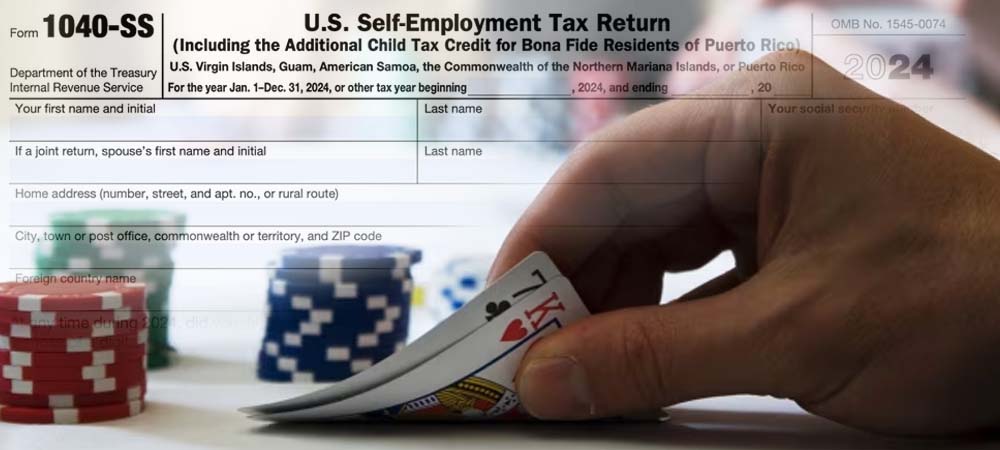
- New tax law limits gamblers to deducting only 90% of losses starting in 2026, forcing players to pay taxes on money they never actually won.
- Many pros are considering retirement as casino operators report dropping tournament participation and scaled-back bookings for 2026.
- Nevada lawmakers are pushing for reversal, but Congress needs to act quickly before the damage becomes permanent.
LAS VEGAS - The poker world is bracing for a financial blow that could reshape the game's landscape across America, and it all starts with a provision buried deep in President Trump's One Big Beautiful Bill Act.
Both professional and recreational players will have to deal with a harsh new reality starting in 2026. They are only able to deduct 90% of their gambling losses from their profits when it comes time for taxes. This seemingly small change has huge implications for anyone who takes poker seriously.
The data reveals a brutal picture. Consider a professional who earns $100,000 from tournament victories but spends the same amount on losses and buy-ins over the course of the year. Prior to this law, the IRS considered that to be breaking even. The same gamer now has to pay taxes on $10,000 that they never received. Their decision to continue competing or pursue another career rests heavily on the additional tax burden.
The Tax Fallout Has Already Begun
Erik Seidel, a ten-time World Series of Poker bracelet winner and member of the Poker Hall of Fame, has stated that he may be forced to retire. His worries are not unique to him. Professional poker player groups in states with poker are considering significant reductions or complete withdrawals from the game.
The consequences are not limited to individual players. According to casino operators, players are already cutting back on their 2026 plans, which could result in fewer people attending big events like the WSOP. As the tax burden makes grinding tournaments financially unfeasible, even Nevada online poker companies are concerned about smaller player pools.
Ahead of the Super Bowl and March Madness, sportsbooks are experiencing slowdowns as recreational bettors reevaluate their gambling budgets. For a business currently juggling regulatory obstacles in several places, the timing couldn't be worse.
Bills to reinstate the full deduction have been proposed by Nevada politicians from both parties, but the outcome is still unclear. American Gaming Association CEO Bill Miller is still optimistic about an early 2026 resolution, but Congress would need to overcome its reluctance to reopen Trump's flagship legislation. Until then, the poker community has to put up with an uncomfortable waiting game because their livelihoods are in danger.